Over the past five decades, Apple has repeatedly reshaped the tech landscape by abandoning older technologies in favor of new ones. These bold moves often sparked controversy at first, but many eventually became industry standards. From removing floppy drives to eliminating headphone jacks, Apple's willingness to "murder its darlings" has repeatedly pushed the entire tech world forward.
nnThe colorful iMac G3 in 1998 marked a clean break from the past. By embracing USB and internet connectivity, Apple also dropped the 3.5-inch floppy disk drive. Though it seemed radical at the time, this decision paved the way for thumb drives and eventually cloud storage, rendering older removable media obsolete.
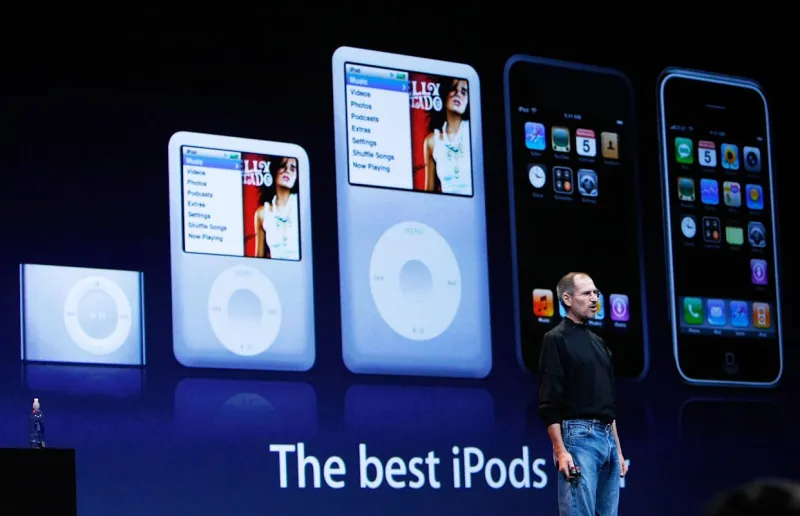
nnIn 2007, Apple's iPhone didn't just introduce a new kind of phone—it signaled the end of dedicated portable music players. The iPhone's multifunction design made standalone devices like the iPod redundant, and by 2022, even the iPod Touch was discontinued. This was a clear case of Apple cannibalizing its own successful product to stay ahead.
nnThe iPhone also killed the physical smartphone keyboard. While early users struggled with the on-screen touch keyboard, software alternatives quickly evolved with predictive text, swipe typing, and support for multiple languages. Physical keyboards soon became a relic, confined mostly to niche devices.
nnThe MacBook Air in 2008 took the next step by removing the optical drive entirely, enabling ultra-thin designs. Apple offered workarounds like Remote Disc and external SuperDrives, but the industry soon followed, embracing digital downloads and streaming over physical media.
nnApple's refusal to support Adobe Flash on iOS, formalized in Steve Jobs' 2010 "Thoughts on Flash" letter, accelerated the web's shift to open standards like HTML5. By denying Flash access to millions of iOS users, Apple nudged developers—and users—toward the App Store, where it could control and profit from the ecosystem.
nnPerhaps no change was as controversial as the removal of the headphone jack in 2016. Branded as an act of "courage," this move pushed wireless earbuds into the mainstream. Apple's AirPods, introduced alongside the iPhone 7, made wireless listening seamless and desirable, even as competitors initially mocked the decision.
nnThe same year, Apple overhauled its MacBook Pro with USB-C ports only, eliminating MagSafe, HDMI, and SD card slots. This "donglegate" forced professionals to rely on adapters, but it also accelerated the adoption of USB-C across the industry. Eventually, Apple brought back some ports—including MagSafe—acknowledging user needs while still pushing toward a more unified future.
nnEach of these transitions came with short-term pain but long-term benefits. By consistently abandoning the old in favor of the new, Apple has repeatedly demonstrated that progress often requires letting go of what once felt indispensable.